A few years ago, when the granddaughter of a co-worker died, I wrote a little free verse poem for the girl's parents. I would have had no clue what to say to someone going through such grief, but in a poem you can say almost anything. I wanted to tell them of my assurance that their daughter was not lost to them forever, but without sounding too preachy. Though it's not as good as the Hermit's recent effort, this is what I came up with:
When Bright Eyes Are Dimmed
When bright eyes are dimmed
And closed in death’s embrace,
And the loss is felt more than seen,
The days of grief seem endless.
You mourn out your days
And the intolerable nights
In the fear that you’ll forget
Those eyes, that smile, that touch.
And though in time you sleep again
It’s never quite so peaceful as before,
And still you say goodnight
To the memory of brightness.
Then one day you’ll close your eyes
To the wonder that is the world,
To find waiting a familiar escort,
Whose glory is only matched
By the brightness of eyes.
Wednesday, June 30, 2010


Thursday, June 17, 2010
Leave Off Them Clothes
I feel a little guilty going so quickly from the sacred to the spicy, but hey, a challenge is a challenge and Wes Mathis threw down the gauntlet of a rondeau (see comments to The Stalker's Sonnet for a description). He says it is an old French poetic form. The only thing I recall about French literature from school is that it always seemed to focus either on sex, death or existentialism. So here is my first shot at a rondeau, incorporating a little of all three elements.
Leave Off Them Clothes
To ride the waves upon the sea
Then scramble ‘cross the burning sand
And tend to Eden. Hand in hand
We’ll rule and set the natives free.
The dream returns emphatically
When pool-blue eyes seem to agree
With nature’s call, nay, its command:
Leave off them clothes.
The dream may fade eventually
As death draws close with its decreeTo part two hearts, one left to stand
Bereft in weeds of mourning grand.
So when they come to bury me,
Leave off them clothes.

Monday, May 31, 2010
Be Ye Therefore Perfect
Responded to another writing challenge yesterday. A neighbor and great friend, Kevin Pace, who is a gifted musician and composer, asked me at church if I had ever written a hymn text. I had never attempted to do so in the past, so later that afternoon I got to work and the following is what I came up with. I sent a copy to Kevin and he reports that he immediately had a tune to go with it (he's pretty amazing that way).
Anyway, here is the text. I'll post the music when Kevin finishes putting it together.
Be Ye Therefore Perfect
VERSE 1

Be ye therefore perfect,
My Savior said to me,
And yet I find that on my own
I live imperfectly.
Each time that I falter,
I seek to hide my shame.
But only through confession can
I seek the Savior’s name.
CHORUS
Repentance is a gift of God
From His Beloved Son.
I humbly seek to change my heart
And with them both be one.
VERSE 2 (add upbeat to both stanzas)
Temptations all around me,
My weaknesses are clear,
But through atoning sacrifice
Christ banishes my fear.
Perfection still eludes me,
Though striving year by year.
Forsaking sin I turn to God
And find Him ever near.
REPEAT CHORUS
Repentance is a gift of God
From His Beloved Son.
I humbly seek to change my heart
And with them both be one.
VERSE 3
Show me clearly Father
The path to Thee on high.
And help me know Christ is the One
On whom I can rely.
Precept upon precept,
The path of Christ is sure
So step by step I’ll follow Him
And every test endure.
REPEAT CHORUS
Repentance is a gift of God
From His Beloved Son.
I humbly seek to change my heart
And with them both be One.
Anyway, here is the text. I'll post the music when Kevin finishes putting it together.
Be Ye Therefore Perfect
VERSE 1

Be ye therefore perfect,
My Savior said to me,
And yet I find that on my own
I live imperfectly.
Each time that I falter,
I seek to hide my shame.
But only through confession can
I seek the Savior’s name.
CHORUS
Repentance is a gift of God
From His Beloved Son.
I humbly seek to change my heart
And with them both be one.
VERSE 2 (add upbeat to both stanzas)
Temptations all around me,
My weaknesses are clear,
But through atoning sacrifice
Christ banishes my fear.
Perfection still eludes me,
Though striving year by year.
Forsaking sin I turn to God
And find Him ever near.
REPEAT CHORUS
Repentance is a gift of God
From His Beloved Son.
I humbly seek to change my heart
And with them both be one.
VERSE 3
Show me clearly Father
The path to Thee on high.
And help me know Christ is the One
On whom I can rely.
Precept upon precept,
The path of Christ is sure
So step by step I’ll follow Him
And every test endure.
REPEAT CHORUS
Repentance is a gift of God
From His Beloved Son.
I humbly seek to change my heart
And with them both be One.
Saturday, May 22, 2010
Tirade: More Then Than
We who revel in the beauty of the English language tend also to bristle at its misuse. Thus, whenever in the presence of a kindred spirit, we sticklers will often swap tales of egregious abuses of the mother tongue. We do so not only to preen and display our advanced linguistic knowledge, but also in the likely vain hope that these mistakes, if regularly identified and sharply ridiculed, will not take hold and further bastardize our beloved, semi-orderly tongue. Our greatest fears and frustrations are realized whenever some ugly, unjustified contortion becomes popular and eventually moves toward acceptance through the infamy of "common usage."
We each have our favorite horror stories. We repeat them over and over to anyone who will listen, thinking that just maybe we can win enough converts to turn back the tide of misguided commonality and banish the mangled word or phrase to the ash heap of grammatical gaffery. It is often a lost cause.
For instance, I spent years railing against the too frequent misuse of the word "impact" as an active verb. "The proper word is 'affect'," I would insist, "The economy can 'affect' your salary, but it cannot 'impact' your salary unless you mean to say it can compress it like a car running into a cement wall" (definitely a possibility, but that is not what was usually meant). I accepted this as a lost cause, however, when national newscasters and writers for the New York Times began regularly using the verbified noun. Impact as a verb did, after all, have a certain oomph that was lacking in the milder, but more proper, affect. It was also a godsend to those who struggled with the difference between "affect" and "effect," which, I suspect, is the real reason so many journalists adopted impact as their own.
The latest cringe-inducing monstrosity, however, has no such beneficial attributes. It is so tiny in origin as to easily go unnoticed by all but the hyper-vigilant, and yet is so wrong that no self respecting stickler can let it pass without both indignant comment and awe-struck wonder at the stupidity of our countrymen. Yet when the error is identified, the linguistically unwashed and growing crowd whose laissez-faire attitude about language tilts them ever further toward illiteracy responds, "What’s the fuss? It is, after all, only one little letter out of place."
One little letter. Don’t they realize that the tiniest errors are often the most insidious? The substitution of one little letter can turn a perfectly comprehensible word, phrase or idea into absolute mush.
"But why does it matter?" they reply. "We know what they are trying to say. As long as we are communicating, why should it matter if one word is wrong?"
Because clarity counts. Every time the reader or listener has to wonder at confused meaning or expend extra mental effort translating error-ridden prose into comprehensible ideas, there is a greater likelihood of miscommunication, less focus on the meaning or power of the ideas expressed, and a reduced ability to critically evaluate truth, deception or deeper meaning in what is placed before us. Proper usage fosters understanding. Misuse muddies the waters.
So, what is this miniscule interloper which is inducing such a foaming rant? It is usually encountered when the sloppy author intends a comparison and wants to identify the greater of the objects or ideas being compared. But rather than using the proper phrase "more than," the miscreant will substitute an "e" for the "a," changing the phrase to "more then." For example, "This is more then that" or "More then anything else, I like crumpets" or "You’re more beautiful then moonlight." GAAH!
The first time I saw this misconstruction, I assumed it was a simple typographical error, easily missed by the bleary-eyed proofreader (if such a job still exists), or passed as legitimate by the indiscriminate "spell-check" of a modern day computerized proofer. But over time, this error has become widespread. In the last week alone, I have encountered it three different times from three different sources: my kid’s high school English teacher (I fear for the future), in a newspaper article by a supposedly professional journalist, and in a published manuscript from a reputable publisher.
I have also seen this sluggard's mistake using comparitive words other than "more." For instance, "clearer then glass," "stronger then steel," or some other tired cliche (another evidence of lazy writing). It appears also (but less frequently, for some odd reason) with the word "less": "I now sleep less then I used to."
These are no mere typos. And it is time to take a stand.
"Then" has nothing to do with comparisons, people. It has everything to do with either sequence ("First this, then that") or identifying a point in time that isn't the present ("Not now, but then"). Rarely does "then" ever follow the word "more" and when it does, it is used to describe the timing or order of events. For instance: "Concerning sex in marriage, at first you get more, then later, less" (Hopefully much less if you are guilty of swapping "then" for "than" – thus reducing the possibility of genetic transmission of such sloppy prose).
I can understand how the error has crept into the language, though understanding implies neither acceptance nor sympathy for this unpardonable blunder. When "more than" is spoken out loud and quickly, it often sounds like "more then." People who do not read regularly often don't concern themselves with the spelling of words, opting rather to place importance only upon how they sound. These phonetic spellers (a stickler’s term for mouth-breathers) are too often reinforced when no one corrects their errors (not even their English teachers, nowadays) and spell-check lets it ride. To be fair, a good spell check program will mark "more then" as grammatically incorrect, even though the spelling passes muster. But in our high-speed, text messaging world, who takes time to correct grammar anymore?
I do. I may have capitulated on impact, but I will never yield to this falacious phrase.
There are some who will dismiss this tirade as the rantings of an old curmudgeon who can't accept that English is an ever-evolving language where new words and phrases are adopted and rejected with each generation. But I am not that guy. I do not think we need an English equivalent of the Académie française which the French fund in a vain attempt to preserve the purity of their tongue. I firmly contend that English is stronger, more expressive, and engenders greater creative thought because of its evolving nature.
But just as in evolution, weaklings must die. We must firmly crush that which diminishes rather than adds to the power of expression. And if we let this one little letter between then and than go unchallenged, how will we then be able to clearly express the following statement?:
"I love you now more than then."
Think about it. Then then? Pass the bazooka, please.
To summarize: if you wish to compare, then remember to first write "more" then "than."
Are we clearer than mud? More than ever? Then my work here is more than done.
We each have our favorite horror stories. We repeat them over and over to anyone who will listen, thinking that just maybe we can win enough converts to turn back the tide of misguided commonality and banish the mangled word or phrase to the ash heap of grammatical gaffery. It is often a lost cause.
For instance, I spent years railing against the too frequent misuse of the word "impact" as an active verb. "The proper word is 'affect'," I would insist, "The economy can 'affect' your salary, but it cannot 'impact' your salary unless you mean to say it can compress it like a car running into a cement wall" (definitely a possibility, but that is not what was usually meant). I accepted this as a lost cause, however, when national newscasters and writers for the New York Times began regularly using the verbified noun. Impact as a verb did, after all, have a certain oomph that was lacking in the milder, but more proper, affect. It was also a godsend to those who struggled with the difference between "affect" and "effect," which, I suspect, is the real reason so many journalists adopted impact as their own.
The latest cringe-inducing monstrosity, however, has no such beneficial attributes. It is so tiny in origin as to easily go unnoticed by all but the hyper-vigilant, and yet is so wrong that no self respecting stickler can let it pass without both indignant comment and awe-struck wonder at the stupidity of our countrymen. Yet when the error is identified, the linguistically unwashed and growing crowd whose laissez-faire attitude about language tilts them ever further toward illiteracy responds, "What’s the fuss? It is, after all, only one little letter out of place."
One little letter. Don’t they realize that the tiniest errors are often the most insidious? The substitution of one little letter can turn a perfectly comprehensible word, phrase or idea into absolute mush.
"But why does it matter?" they reply. "We know what they are trying to say. As long as we are communicating, why should it matter if one word is wrong?"
Because clarity counts. Every time the reader or listener has to wonder at confused meaning or expend extra mental effort translating error-ridden prose into comprehensible ideas, there is a greater likelihood of miscommunication, less focus on the meaning or power of the ideas expressed, and a reduced ability to critically evaluate truth, deception or deeper meaning in what is placed before us. Proper usage fosters understanding. Misuse muddies the waters.
So, what is this miniscule interloper which is inducing such a foaming rant? It is usually encountered when the sloppy author intends a comparison and wants to identify the greater of the objects or ideas being compared. But rather than using the proper phrase "more than," the miscreant will substitute an "e" for the "a," changing the phrase to "more then." For example, "This is more then that" or "More then anything else, I like crumpets" or "You’re more beautiful then moonlight." GAAH!
The first time I saw this misconstruction, I assumed it was a simple typographical error, easily missed by the bleary-eyed proofreader (if such a job still exists), or passed as legitimate by the indiscriminate "spell-check" of a modern day computerized proofer. But over time, this error has become widespread. In the last week alone, I have encountered it three different times from three different sources: my kid’s high school English teacher (I fear for the future), in a newspaper article by a supposedly professional journalist, and in a published manuscript from a reputable publisher.
I have also seen this sluggard's mistake using comparitive words other than "more." For instance, "clearer then glass," "stronger then steel," or some other tired cliche (another evidence of lazy writing). It appears also (but less frequently, for some odd reason) with the word "less": "I now sleep less then I used to."
These are no mere typos. And it is time to take a stand.
"Then" has nothing to do with comparisons, people. It has everything to do with either sequence ("First this, then that") or identifying a point in time that isn't the present ("Not now, but then"). Rarely does "then" ever follow the word "more" and when it does, it is used to describe the timing or order of events. For instance: "Concerning sex in marriage, at first you get more, then later, less" (Hopefully much less if you are guilty of swapping "then" for "than" – thus reducing the possibility of genetic transmission of such sloppy prose).
I can understand how the error has crept into the language, though understanding implies neither acceptance nor sympathy for this unpardonable blunder. When "more than" is spoken out loud and quickly, it often sounds like "more then." People who do not read regularly often don't concern themselves with the spelling of words, opting rather to place importance only upon how they sound. These phonetic spellers (a stickler’s term for mouth-breathers) are too often reinforced when no one corrects their errors (not even their English teachers, nowadays) and spell-check lets it ride. To be fair, a good spell check program will mark "more then" as grammatically incorrect, even though the spelling passes muster. But in our high-speed, text messaging world, who takes time to correct grammar anymore?
I do. I may have capitulated on impact, but I will never yield to this falacious phrase.
There are some who will dismiss this tirade as the rantings of an old curmudgeon who can't accept that English is an ever-evolving language where new words and phrases are adopted and rejected with each generation. But I am not that guy. I do not think we need an English equivalent of the Académie française which the French fund in a vain attempt to preserve the purity of their tongue. I firmly contend that English is stronger, more expressive, and engenders greater creative thought because of its evolving nature.
But just as in evolution, weaklings must die. We must firmly crush that which diminishes rather than adds to the power of expression. And if we let this one little letter between then and than go unchallenged, how will we then be able to clearly express the following statement?:
"I love you now more than then."
Think about it. Then then? Pass the bazooka, please.
To summarize: if you wish to compare, then remember to first write "more" then "than."
Are we clearer than mud? More than ever? Then my work here is more than done.
Thursday, April 22, 2010
The Stalker's Sonnet
My daughter Becca is putting together a writing portfolio for her high school English class. To get an A, one of the requirements is to include an original sonnet. She asked me if I knew what a sonnet was. I had to admit that other than its connection with Shakespeare, I could not remember the details. I knew it had something to do with "iambic pentameter" but I wasn't going to bring that up 'lest she ask me to define it.
I told her I would do some research and get back with her. Dummies.com has a great little summary on writing a sonnet, explaining both iambic pentameter and classic Shakespearean rhyming patterns.
I was intrigued. I have never written a sonnet. It is about time to remedy that deficit. Here is my first attempt:

Stalker
I shamble through this life with some unease
Regardless of the beauty in the skies,
Nor seeing much that's fair on land or seas,
For only you find favor in my eyes.
I've seen the diamond shimer in the sun,
The emerald grace the brow of foreign gods,
The rubies cut and gleaming for the one
Whose smile did shame them all as mere facades.
The world may call me strange or blind or mad
To miss so much that others see as fair.
To me they seem but frivolous and sad
Compared to thee. Oh, let me stop and stare.
Just let me keep thy vision in my mind,
For earthly sights have never been so kind.
_______________________
I think the form and meter are right. The question is, "How does it make you feel?"
I told her I would do some research and get back with her. Dummies.com has a great little summary on writing a sonnet, explaining both iambic pentameter and classic Shakespearean rhyming patterns.
I was intrigued. I have never written a sonnet. It is about time to remedy that deficit. Here is my first attempt:
Stalker
I shamble through this life with some unease
Regardless of the beauty in the skies,
Nor seeing much that's fair on land or seas,
For only you find favor in my eyes.
I've seen the diamond shimer in the sun,
The emerald grace the brow of foreign gods,
The rubies cut and gleaming for the one
Whose smile did shame them all as mere facades.
The world may call me strange or blind or mad
To miss so much that others see as fair.
To me they seem but frivolous and sad
Compared to thee. Oh, let me stop and stare.
Just let me keep thy vision in my mind,
For earthly sights have never been so kind.
_______________________
I think the form and meter are right. The question is, "How does it make you feel?"
Wednesday, March 31, 2010

Saturday, March 06, 2010
Balance
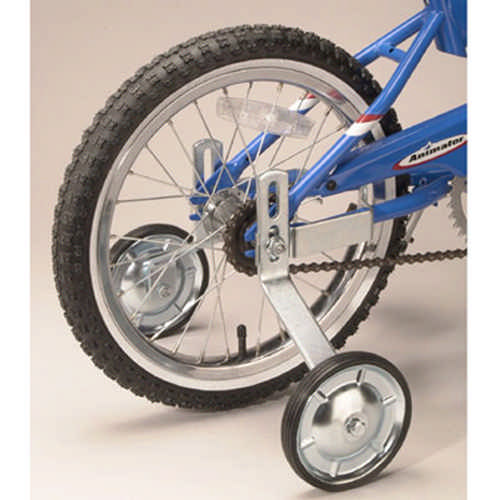
I was tormented by training wheels.
For over a year, my younger brother Rob had been riding a "two-wheeler" without relying on the crutches that I still needed to stay upright. I envied the silent rolling of rubber wheels on pavement when he rode, but inwardly cringed at the grating plastic rattle that accompanied my travels.
The extra wheels were one more visible evidence among many that I was still a "little" kid. Everyone I knew my own age went everywhere on bicycles, but my bike was the only one still needing trainers to keep me from crashing to the earth. There were other bikes in the neighborhood with training wheels, but they also sported tassels on the handlebars and baskets over the front wheels and belonged to my friends' little sisters. No one ever said anything, but I knew what they were thinking. I was thinking it too: Baby.
It wasn't long before I stopped riding my bike altogether, at least in public. For a while I tried to keep up on foot, but more often than not, I would be left behind. Soon I stopped trying to tag along and just made excuses as to why I had to stay home. I still loved to ride, however, so when no one was looking, I would pull out my wheel-encumbered bike and glide around the cement court in our back yard, pretending that the extra supports had been removed. The training wheels were positioned just a bit higher than the back wheel of my old Schwinn Sting-Ray, so that if you stayed exactly vertical, both of the little wheels would be off the ground and I would be spared the shameful sound of their otherwise incessant rattle. But only for a moment or two. Despite my longing for the freedom of the two-wheeled road, I was only able to hold the perfectly upright position for as long as it took to shift from one side to the other. The court was not big enough to go long stretches without a turn, so I could not muster much speed either. Teetering on three wheels, if you took a turn too fast, a face plant was nearly guaranteed.
Not that I didn’t try to learn. When my dad was in town, he would remove the training wheels and spend days trying to teach me to ride. I must have run him ragged as he would try to keep me upright on that precarious perch. But as soon as he would let go of the bike, I would tilt off to one side or the other and end up on the pavement. For the life of me, I could not find my balance, and each skinned knee or elbow seemed to convince me further that I would never master this impossible skill. Day after day, he would convince me to try again, expressing his confidence that this time it was going to “click.” I wanted it to click. I was tired of being left behind, tired of the humiliation. I wanted to ride. But each attempt ended in another crash, another scrape, another bruise, another evidence of my own ineptitude. The fear of falling made falling inevitable.
One day, after the last of several failed attempts, my younger brother rode up on his bike and circled me as I lay in the street. “See? It’s easy,” he said. I’m sure he was trying to be helpful, but I was utterly crushed and defeated. I had eaten the asphalt one too many times. I gave up in tears, vowing never to look at another bicycle, and went inside.
Mother met me at the door and took me to her room and, being a woman of great faith, she suggested I ask my Heavenly Father to help me ride a bike. I didn’t hold out much hope for this strategy. After all, I had previously prayed for a magic belt which would make me fly and that wish was never granted. At the time I didn’t see much difference between these two impossible modes of transportation. If God couldn’t or wouldn’t make me fly, why would His response to riding be any different? Nevertheless, I agreed to Mom’s suggestion and began to ask for divine intervention. Although my prayers may have been faithless, I suspect the prayers of my parents were offered up in earnest. It must have pained them to see my despair.
I gave up on the prayer strategy after only a couple of days. However, my parents must have continued to pray on my behalf. A few weeks later, the prayers were answered.
In a dream of the night, I saw myself climbing on the back of a little red two-wheeler that had been gathering dust in our garage, pushing off and pedaling, faster and faster, around and around the outside edge of the old cement court. It was thrilling, and so real I could feel the wind in my face and the shifting of weight to the inside of each speeding curve. I knew the joy of balance.
The next morning I arose early and, still dressed in pajamas, I went to the garage, found the little red bike, rolled it out to the court, and before I was awake enough to remember that what I had experienced was only a dream, I climbed on and never looked back. About ten minutes later I realized what was actually happening and began shouting for everyone to “Come see! Come see!” I was hurtling around the court at breakneck speeds, tilting low into corners and pedaling with joyous abandon. It was a moment of triumph and my whole family rejoiced.
That night, before tucking the world's happiest and most exhausted boy into bed, my mother reminded me of our prayers for help, and led me to understand that the God of Heaven had heard our prayers and blessed me with a dream. She also suggested that it would be a good idea to thank Heavenly Father for this blessing. That night God became real to me. The guiding influence of parents helped me to understand that prayers are heard and answered by a loving, caring Father who is just waiting to help us succeed if we will but ask in faith. They taught me that God is a God of miracles, and that all things are possible when you enlist His aid in a good cause. That night they also taught me the importance of expressing gratitude for the blessings received of this loving Father.
From that day until I graduated to a car, if I was going anywhere, I was on a bike and moving fast. It was not long before I had rejoined the roving band of bicycle boys and was soon known as one of the most fearless of riders. It would be a few more years before I would master the coveted "Wheelie," but the fear of falling had been banished forever...along with the training wheels.
Go with God.
Sunday, January 24, 2010
Word Miner
Mike (Aquarius Tigre) issued a challenge on his Haiku Sestina Open blog to try a new poetic form. I know I trashed haiku as a somewhat useless form of poetry (at least in English) in an earlier post, but I'm game to try something new. So here goes:
 I’m a word miner.I spread these old fingers wide.
A keyboard awaits.
Picking at the soul
Requires a few backspaces,
Pauses, fits and starts.
Words lodged in the heart
Must be pried from their moorings
With careful tapping,
Awaiting rhythms
To release the avalanche
Inevitable.
When it comes it comes.
The words are then like diamonds
Made of light and years.
Set them on the page
Where they can no longer cut,
But simply sparkle.
I’m a word miner.A keyboard awaits.
Picking at the soul
Requires a few backspaces,
Pauses, fits and starts.
Words lodged in the heart
Must be pried from their moorings
With careful tapping,
Awaiting rhythms
To release the avalanche
Inevitable.
When it comes it comes.
The words are then like diamonds
Made of light and years.
Set them on the page
Where they can no longer cut,
But simply sparkle.
Sunday, December 20, 2009
Dodge Ball - Part 2

In this instance, however, all but two of the balls ended up stuck on my side of the court. Instead of two people throwing at the same time, the opposing team just handed both balls to the Alpha-chucker Stan. I held one of the previously captured balls in my hands which I had been using as a defensive shield, deflecting incoming balls to the side when possible. With my puny arms, there was no way I could possibly win this contest, but I thought that if I could just avoid the two remaining balls and somehow keep them from rebounding back to the opposing side, I might possibly be able to force a draw by refusing to throw any balls back at the other team. It would be considered a cheap trick of course, unless I could do something to show some courage…something like catching one of the last two balls and thus eliminating Stan.
It was a crazy idea, but I couldn't dismiss it. To catch a ball thrown by Stan would be a coup of monumental proportions. I started to plan.
It would have to be a perfect throw directed right to the gut for me to have a chance at cradling the ball with both arms as it came in for the kill. Stan’s first throw, however, seemed like it was going to be off target, a bit high and to my left. As the ball came closer, however, it seemed to change course. I raised my shield ball just in time to deflect what would have been a perfect head shot. The guy had thrown a curve with a dodge ball! College baseball scouts would have been salivating had they seen that pitch. It came screaming in with such force that it nearly knocked the shield ball from my hands. Instead, it caromed off the wall behind me and bounded back across mid-field; they would have another shot at me. So long as Stan was throwing, they would likely have as many chances as they needed.
In the mean time, Stan was preparing for his second attempt. He had moved all the way to the back wall and began a loping gait towards the mid line, accelerating as he approached. It was like he was preparing to hurl a javelin. Speed and balance, form and grace, control at the edge of human performance are a beauty to behold, except when focused against your continued existence. Then it becomes a perfect terror.
As Stan planted his front foot and twisted forward, the ball was already an elongated red blur. As it left his hand, time slowed and my mind began to race with options: if it comes in high, I’ll duck and deflect, if it is low, I’ll either jump over or deflect it to the ground, if off to the right or the left, I’ll dodge the opposite direction. It soon became clear, however, that none of those conditions applied. Stan had thrown a perfect strike, and a fastball at that. There were really only two options: 1) attempt a difficult straight-on deflection where, at the speed of Stan’s throw, it was likely I would lose my grip on the shield ball and end up taking one in the face, or 2) try to catch the cursed thing.
Despite its velocity, I didn’t think I would have a better chance at catching one and winning a little glory. The ball was headed straight for my gut where I hoped to smother its heat and trap it with both arms. I dropped my shield and prepared for impact. I knew the timing would have to be perfect. Trying to soften the blow, I took a little hop backwards and arched my back to form a pocket for the projectile. As it invaded my personal space, I closed my arms around the ball as quickly as I could.
It is amazing how quickly the human spirit can cycle through emotions. In less than two seconds, I travelled a journey through fear, wonder, determination, surprise, exultation, concern and ultimately despair. Fear had been lurking ever since I stepped on the court, but didn't really bare its teeth until the opposing team handed the two remaining balls to Stan. As he let fly the second one, however, fear gave way to wonder at the beauty of the toss. A strange but steely determination set in as I dropped the shield ball and decided to go for the catch. As my arms wrapped down around the ball, I was both surprised at the force of the blow which now drove me even further back and knocked the wind right out of me, and exultant that I was in position to actually make the catch; the plan was working! My arms were in perfect position to counter the expected rebound of the ball off my midsection.
The ball, however, had other ideas. Having been hurled with what kids nowadays would call a “buttload” of backspin, it did not rebound back into my waiting arms as expected. Rather, it took a downward course, bouncing first off my thighs, then up to my arms at an oblique angle, then off my chest and grazing my chin as it escaped through the top of the trap I had so carefully laid for it. I lunged to retrieve the ball before it hit the ground, swatting desperately at the air as the ball was just out of reach.
The ball bounced. I was out.
To be so close to glory after so many years without a hope or glimpse of it, to then expect and anticipate it even for a split second, to hear it at your front door then rush to open it only to find the porch empty – the promise of glory only a doorbell ditcher – crushed my spirit. Despair rushed in to finish off the parade of brief emotions.
But only for a moment. Despair too was short-lived. A corner had been turned. Deciding to drop my shield ball and attempt that catch was a pivotal event. At that moment, my fear was centered in the ball. And for the first time in memory, rather than trying to run from or avoid it, I confronted the Beast. I faced my fear and it was exhilarating. Even though the exhilaration was temporary, it was enough. From that point on, I began to see fear differently, feel it differently. I developed an intense curiosity about it, and found that when you looked at it straight on, it would usually disappear or else shrink so small as to lose its significance. In short, it could be mastered.
And that potential, that hope, opened up the world and made all things possible. I would no longer cower or flee, but stand firm and even embrace the fears that for years held me captive. Each time I did so, I found strength. What started as an attempt to corral one simple red rubber orb sparked the courage to write, to act, to play, to work, to participate -- to meet life rather than dodge it.
PS: Thank you, Stan. We miss you still.
Tuesday, December 15, 2009
Dodge Ball - Part 1

Up until about a year ago when Ben Stiller made a farcical movie about professional dodge ball players, I had assumed that the sport had died out, vestiges of which only remained in backwater junior high schools where a few sadistic gym teachers still enjoyed the display of fear and pain that accompany this terrible game where the object is to violently hurl rubber orbs at fellow students while attempting to avoid being pelted yourself. Despite this premise, I have a soft spot in my heart for the game for what it taught me about both myself and the nature of fear.
Being an adolescent of very little girth and even less natural athletic ability, dodge ball seemed a cruel punishment for crimes I had yet to commit. The unfairness of the very concept was magnified even more than usual by the presence in my gym class of one of the gods of dodge ball: Stan Callister. At 13-years-old, Stan was what you would call an early bloomer – hair in all the right places and muscles bulging from everywhere else. We were about the same height, but that’s where the physical similarities ended. If we had ever been standing side by side, it would have been like miniature versions of Stan Laurel on a hunger strike beside Hulk Hogan in his prime.
Unfortunately, we were rarely standing side by side. As fate would have it, we were usually facing opposite sides of the dodge ball arena. Those picked to be on Stan’s team were generally gleeful, while those on the opposing team trembled. For Stan could throw. His wind up and release was a thing of terrible beauty. He threw with such speed and accuracy as to suck all the air into the ball’s trailing vortex and leave you breathless if you were anywhere in the vicinity. And heaven help you if you were his target. Had he not perished a few years later from Leukemia, Stan would have been pitching in the majors for certain.
I, on the other hand, had little to offer in the way of offensive firepower. My skinny arms could not muster the kind of speed to overpower an adversary, so if I was to throw at all, I would have to go for stealth and angles. My straight-on throws were easily caught. I would have to concentrate on Defense if I was to be of any help to my team. Being thin was an asset in this regard as I presented less of a target to the opposition. My reaction times were not bad either so I would bob, jump and weave with the best of them. I became an artful dodger. I thus found myself, quite often, as one of the last pins standing in this human bowling arena.
That is, until Stan locked on to me as his target.
--to be continued
_______________
*In the LDS church, the Young Single Adults (YSA) program is designed to support the single 18- to 30-year-olds and provide opportunities for both spiritual and social development (read: help them find a mate and get hitched).
Wednesday, November 18, 2009
Last of the Haiku
Despite the extensive training in junior high school, I have to finally admit that haiku is the most useless poetical form there is -- at least in English. I'm sure in Japanese the form is brilliant in both its simplicity, grace and flow. But in English, the constraints of 5-7-5 are just so rhythmically awkward as to make the reader stumble through the poem in fits and starts.
Nevertheless, I read earlier today that the Salt Lake Tribune was hosting a haiku contest and the submission deadline was today at 5pm. The catch? The poem had to have something to do with "Jello."

I couldn't resist.
Here are a few of the submissions I cranked out during my lunch break:
Dare you add carrots?
I am no vegetable dish.
Away vile shredder!
Tremulous at rest
Fearing the coming onslaught
Cries, "Hide me with cream!"
Once a small fellow
Consumed way too much Jello.
Now he doth bellow.
Jello wrestlers part
More sticky sweet than slimy
"Wanna 'nother round?"
Five Jello salads
Jiggle madly in my fridge.
Stop sisters. No more!
Sliced in perfect squares
Like finely carved temple blocks
Mormon Jello rocks!
Jello fight at night
Gelatenous gobs fly by
Hurled by spattered troops.
Wiggles and jiggles
Won't tickle any stickler.
Jello Haiku? BAH!
I still can't take haiku seriously as an art form, so these may be the last haiku I ever write -- unless someone holds another tongue-in-cheek contest. Perhaps on Yams.
Nevertheless, I read earlier today that the Salt Lake Tribune was hosting a haiku contest and the submission deadline was today at 5pm. The catch? The poem had to have something to do with "Jello."
Here are a few of the submissions I cranked out during my lunch break:
Dare you add carrots?
I am no vegetable dish.
Away vile shredder!
Tremulous at rest
Fearing the coming onslaught
Cries, "Hide me with cream!"
Once a small fellow
Consumed way too much Jello.
Now he doth bellow.
Jello wrestlers part
More sticky sweet than slimy
"Wanna 'nother round?"
Five Jello salads
Jiggle madly in my fridge.
Stop sisters. No more!
Sliced in perfect squares
Like finely carved temple blocks
Mormon Jello rocks!
Jello fight at night
Gelatenous gobs fly by
Hurled by spattered troops.
Wiggles and jiggles
Won't tickle any stickler.
Jello Haiku? BAH!
I still can't take haiku seriously as an art form, so these may be the last haiku I ever write -- unless someone holds another tongue-in-cheek contest. Perhaps on Yams.
Thursday, November 05, 2009
Skull Candy

Halloween, which I have always enjoyed, was even more fun than usual this year. Michael and I spent the day before fixing up the garage to look spooky and boobytraping it for the unsuspecting seeker of sweets. Becca planned a party for about 2 dozen of her closest friends. Even though fewer and fewer kids seem to be out trick-or-treating, Halloween still seems to be anticipated and enjoyed by the great majority of the people I know.
I have often wondered what the attraction is. Is it just a fascination with the spooky or bizarre? Perhaps a desire to confront our fear of death? Or just maybe, it is an opportunity to laugh in the face of it. I wish we had the same tradition as in Mexico where on the "Day of the Dead" they eat little skulls made of sugar. Not only would we be laughing at death, but eating it, accepting it as a part of life, and ultimately surviving it.
Sunday, November 01, 2009
No Battle
In a battle of wits
We all take some hits.
The question is, What can you deal?
If you're not too selective
Using naught but invective,
Your fate as a loser you seal.
Written in sympathy to those who battled this week in the pages of the Salt Lake papers over a letter to the editor I wrote. See Sheriff's Crony and Cronyism Alive & Well.
We all take some hits.
The question is, What can you deal?
If you're not too selective
Using naught but invective,
Your fate as a loser you seal.
Written in sympathy to those who battled this week in the pages of the Salt Lake papers over a letter to the editor I wrote. See Sheriff's Crony and Cronyism Alive & Well.
Thursday, October 22, 2009
27 Years
“Twenty-seven years is far too short a time to spend with such an admirable woman.”
When I wrote these words on the card accompanying a dozen medium-stem roses, I knew she would have no idea that the phrase was lifted nearly word for word from Bilbo Baggins’s birthday speech from “Lord of the Rings.” But I was under the gun; it was my anniversary and, as usual, I had not made any definite arrangements beforehand to celebrate our 27 years together. I stopped at the florists on the way home from work so as not to be totally empty-handed and on the spur of the moment, decided to include a small card with the roses. The phrase was the first thing to pop into my head. It’s hard to be original when you are in a hurry, so I went with it.
And yet, now that I have had time to reflect a bit, I can’t think of anything more appropriate. Although the famous old hobbit uttered his original speech just before leaving his home to go live with the elves, I plan to stay on with my admirable woman for at least 27 more years and much longer if I can. I need no elves for enchantment. I still find it in her eyes.
It was her eyes, in fact, that first attracted me and eventually entrapped my heart. I am completely bound by other means now, but her eyes still convince me that in submitting to such bonds I find the greatest freedom. During a family quiz game last week, I was asked what title I would give a song about someone I love. My answer was “Pools of Blue.” I didn’t fool anyone.
Twenty-seven years is a milestone of sorts. It marks the point at which she has been with me longer than she was ever without me. And though certainly there have been times when she would have liked to have strangled me, I have always been confident of her love and her desire for me to remain. She has no idea what great comfort that is, nor what exhilarating joy it brings. I should tell her, but how can one express such monumental feelings without causing her to worry that something is wrong? Nothing is wrong, but worry she will. And I do not wish to add to her burden.
Instead I keep still, watching in wonder at her constant movement to reach out and help, feed, console, or nurture those around her. Though her eyes entrance me, her greatest beauty is in that divine motion to serve the needs of others. In her case, it is a beauty rarely hidden.
It was this beauty that first brought us together. Her roommate was directing a play and needed more “chorus line” players, so she volunteered to help. I went to audition for a part and was disappointed to learn that all the named roles were already filled and they only needed extras. I was cast as a lowly “knight” and she was my “lady in waiting.” She had been waiting a good quarter century. It became my favorite role ever.
I had always fantasized about meeting my mate “on stage,” but had no interest in some flighty prima donna. She was too emotionally honest and grounded to be an actress, however, and when we were first introduced, my mind and heart were prompted with the words, “She could be the one” as clear as if spoken aloud. I have trusted such promptings ever since.
For more than two decades she has stayed at home and raised three exceptional children while I was off at work trying to become a better provider. She had worked for 16 years before the first child came along. She used to have money, a fancy sports car, and traveled wherever and whenever she wanted to go. But she traded it all in for a struggling writer who drove an old AMC Pacer and held his Sunday shoes together with electrical tape. There must have been other times during the past 27 years when she wondered if, financially, she made the right choice. But if so, her doubts have been fleeting, for her commitment to me has always been as Gibralter.
The kids are older now and growing in their independence, so she has started working again. Not so much for the money, though every little bit helps. But for the company of other good women and the chance to make a difference in the lives of struggling school children. “The lights went on for Sally today,” she’ll say, and her eyes will dance in triumph. And I fall all over again.
Yeah. Twenty-seven years is too short a time to spend with such a goddess. Happy Anniversary, Laura.
When I wrote these words on the card accompanying a dozen medium-stem roses, I knew she would have no idea that the phrase was lifted nearly word for word from Bilbo Baggins’s birthday speech from “Lord of the Rings.” But I was under the gun; it was my anniversary and, as usual, I had not made any definite arrangements beforehand to celebrate our 27 years together. I stopped at the florists on the way home from work so as not to be totally empty-handed and on the spur of the moment, decided to include a small card with the roses. The phrase was the first thing to pop into my head. It’s hard to be original when you are in a hurry, so I went with it.
And yet, now that I have had time to reflect a bit, I can’t think of anything more appropriate. Although the famous old hobbit uttered his original speech just before leaving his home to go live with the elves, I plan to stay on with my admirable woman for at least 27 more years and much longer if I can. I need no elves for enchantment. I still find it in her eyes.
It was her eyes, in fact, that first attracted me and eventually entrapped my heart. I am completely bound by other means now, but her eyes still convince me that in submitting to such bonds I find the greatest freedom. During a family quiz game last week, I was asked what title I would give a song about someone I love. My answer was “Pools of Blue.” I didn’t fool anyone.
Twenty-seven years is a milestone of sorts. It marks the point at which she has been with me longer than she was ever without me. And though certainly there have been times when she would have liked to have strangled me, I have always been confident of her love and her desire for me to remain. She has no idea what great comfort that is, nor what exhilarating joy it brings. I should tell her, but how can one express such monumental feelings without causing her to worry that something is wrong? Nothing is wrong, but worry she will. And I do not wish to add to her burden.
Instead I keep still, watching in wonder at her constant movement to reach out and help, feed, console, or nurture those around her. Though her eyes entrance me, her greatest beauty is in that divine motion to serve the needs of others. In her case, it is a beauty rarely hidden.
It was this beauty that first brought us together. Her roommate was directing a play and needed more “chorus line” players, so she volunteered to help. I went to audition for a part and was disappointed to learn that all the named roles were already filled and they only needed extras. I was cast as a lowly “knight” and she was my “lady in waiting.” She had been waiting a good quarter century. It became my favorite role ever.
I had always fantasized about meeting my mate “on stage,” but had no interest in some flighty prima donna. She was too emotionally honest and grounded to be an actress, however, and when we were first introduced, my mind and heart were prompted with the words, “She could be the one” as clear as if spoken aloud. I have trusted such promptings ever since.
For more than two decades she has stayed at home and raised three exceptional children while I was off at work trying to become a better provider. She had worked for 16 years before the first child came along. She used to have money, a fancy sports car, and traveled wherever and whenever she wanted to go. But she traded it all in for a struggling writer who drove an old AMC Pacer and held his Sunday shoes together with electrical tape. There must have been other times during the past 27 years when she wondered if, financially, she made the right choice. But if so, her doubts have been fleeting, for her commitment to me has always been as Gibralter.
The kids are older now and growing in their independence, so she has started working again. Not so much for the money, though every little bit helps. But for the company of other good women and the chance to make a difference in the lives of struggling school children. “The lights went on for Sally today,” she’ll say, and her eyes will dance in triumph. And I fall all over again.
Yeah. Twenty-seven years is too short a time to spend with such a goddess. Happy Anniversary, Laura.
Thursday, October 15, 2009
Middle Age Haiku
And now, in honor of my esteemed 9th grade English teacher who taught me the delicate art of haiku, I present a short collection celebrating the life and frustrations of the middle aged.
Pink slip lies crumpled
in old hand, replaced by young.
Arbys is hiring.
Dental work and cars
"I'm freezing," "I'm hot"
though temperature's constant.
Hot flash rules the day.

Rugged pinecone falls
To sail upon the water
Seeking distant shores.
Menopausal wife
Arises, then sits again
To mourn her lost youth.
Creaking bones arise
To face another morning.
No pushups today.
I eat no more now
Than I ate when just a boy.
Whence come these handles?
You need some wheels, boy
To visit your girl in town?
A bus pass ain't much.
Argue 'til your blue,
Son, you still don't get the car.
We own this keychain.
I am no chauffeur,
Yet the miles I drive the kids
Make me cross...country.
Went to Disneyland.
Fought the crowds for five whole days.
My dreams are of queues.
Breaking wind at night,
Sheet rises, then slowly sets.
Hope the wife's asleep.
Feel free to add your own in the comments section. Remember: 3 lines, 5 syllables in the first and last lines, 7 syllables in the middle line.
Keep your arms and hands
Inside the car at all times,
Stay seated. Have fun!
Pink slip lies crumpled
in old hand, replaced by young.
Arbys is hiring.
Dental work and cars
are the grief of all good men.
Bills. Bills. Bills. Bills. Bills. "I'm freezing," "I'm hot"
though temperature's constant.
Hot flash rules the day.
Rugged pinecone falls
To sail upon the water
Seeking distant shores.
Menopausal wife
Arises, then sits again
To mourn her lost youth.
Creaking bones arise
To face another morning.
No pushups today.
I eat no more now
Than I ate when just a boy.
Whence come these handles?
You need some wheels, boy
To visit your girl in town?
A bus pass ain't much.
Argue 'til your blue,
Son, you still don't get the car.
We own this keychain.
I am no chauffeur,
Yet the miles I drive the kids
Make me cross...country.
Went to Disneyland.
Fought the crowds for five whole days.
My dreams are of queues.
Breaking wind at night,
Sheet rises, then slowly sets.
Hope the wife's asleep.
Feel free to add your own in the comments section. Remember: 3 lines, 5 syllables in the first and last lines, 7 syllables in the middle line.
Keep your arms and hands
Inside the car at all times,
Stay seated. Have fun!
Monday, October 12, 2009
The Politics of Outrage

Am I just out of touch or has the nation gone crazy? Who are all these people who actually take talk shows seriously, especially those on radio? Are they lonely souls who have no one else to listen to? Are they angry, inarticulate souls who cannot express their anger and thus rely on professional mouthpieces to express it for them? Are they souls in turmoil or pain looking for someone who can sympathize, or looking for someone to blame for their troubles?
Whoever they are, there seems to be a lot of them. And the demand for talk show blather shows no signs of ebbing. The political power that the current bevy of celebrity spokespersons now seems to wield should be a source of shame for Americans. Whether the name be Beck, Limbaugh, Hannity, Oprah, Franken or Stern, these are entertainers, not political geniuses. No one should be taking them seriously or giving their political opinions any more weight than you would give David Letterman's opinions on sexual harassment.
Why? Because in the long run, they do what they do for one reason only: to sell advertising. They are selling products just as assuredly as the used car salesman down on Main Street.
I have no beef with Main Street. I have no beef with entertainers. My problem is with the number of people who look to these new cultural icons in order to know what or how to think. It's like this huge segment of the population tunes in to find out what to be upset about. "What would Jesus do?" seems to have morphed into "What did Limbaugh say?"
What happened to the age old search for truth or enlightenment? The modern search seems to be focused on fueling outrage. "What should I be mad about now?"
The problem with the politics of outrage, however, is that nothing gets done. Sure there may be shouting and bluster, but when you start from a position of anger, the only option seems to be revolution rather than compromise. And few people are really angry enough to follow through with revolutionary options, as these generally include the spilling of blood and great suffering. We're not big on suffering, nor of much blood nowadays (except on TV or in the movies -- another personal gripe that we'll save for later). So we just get a little angry and frustrated and grouse that someone ought to do something (specifically, someone else) while we preen in self-righteous indignation.
Real political progress, however, almost always depends on compromise, a continual give and take that requires both an understanding of and a respect for the opposition. Yes you can have strongly held opinions. But you must also realize that those whose opinions are diametrically opposed to yours probably hold them just as strongly as do you. Just like you, they also regard themselves as advocates for what is right and true. They may very well be dead wrong, but to see any progress in a democracy, the people must realize that many times it is more important to be together than it is to be completely right.
Outrage may be easier, for the world is thereby seen as black or white, good or bad, right or wrong, villains versus heroes. Battle lines are drawn, but all that occurs is polarization, not progress. Compromise is harder, but richer, its colors not only more numerous but infinitely more promising. When you choose the path of compromise, you start with the assumption that there are neither villains nor heroes--just good people trying to do good. And when that turns out to be true, common ground can usually be found and change can happen. Rarely will anyone get everything they want, but we move forward and together we can celebrate each small step.
Outrage fueled by today's talk show clowns prevents progress by diluting the nation's focus. Entertainers certainly can't maintain an audience if they repeat the same things day after day, so they must come up with something new for people to be mad about each day. Compromise, however, usually requires a concentrated focus on the same issue over a long period of time in order to discover common ground and the basis for change and progress. It's hard, often boring work -- not the stuff upon which products are sold nowadays.
I am, of course, speaking of politics specifically. There are some areas of life where compromise is neither wise nor a precursor to progress. There are times when lines must be drawn and no quarter given. But even then, outrage is rarely helpful. Quiet determination and perseverance will win the day long before the fiery howling of the outraged.
Think Gandhi.
Think Gandhi.
Change the channel. Turn down the volume. Then let's work together.
Saturday, October 10, 2009
Spaghetti Western

Casting perennial good guy Henry Fonda as the cold-blooded villain was sheer genius. Extreme, steely-eyed close-ups and the mystery surrounding Mr. Harmonica build the tension with each gun battle. And the soundtrack by Ennio Moricone is to swoon over. It's definitely the only western that I would ever have patience to sit through more than once -- and this one is just shy of 3 hours long. I've seen it probably half a dozen times and it still entertains.
I'm not sure why I like it so much, but it may have to do with the ambiguity it presents in defining the line between justice and vengence. I won't spoil it for anyone who has not seen it, but whichever concept you favor, the ending of this flick is definitely sweet.
Sunday, September 27, 2009
Train-bound Souls

With unconcern, they dance in a unified sway,
Each flaw of steel or geography
Nudges life this or that way.
Train-bound souls roll forward, still forward.
Lost in bookish or papered worlds,
Or absorbed in earplugged ecstasy,
They ignore the speed-blurred land.
Train-bound souls, when they finally arrive,
Disgorged from coccoons, free to fly,
Will scatter in every direction,
But proceed evermore in straight lines.
-Mark Fotheringham
Saturday, September 26, 2009
Hidden Heroes
Sometimes I exaggerate. Never on a grand scale, never making things up from thin air. More like an expansion of the truth, in order to show contrasts more clearly or to recreate an emotion that would otherwise be unappreciated in its original smallness.
For instance, I have often said that Wayne Sandberg would have been a dead ringer for Boris Karloff's Frankenstein if you just attached a couple of bolts to his neck. But Frankenstein didn't wear thick coke-bottle glasses with which to view the world, and his teeth were straighter than Wayne's. Wayne was much smaller vertically and a bit larger horizontally. He didn't shuffle along with arms stretched ahead, but rather trundled along with his back ramrod straight, and with one hand ensconced in the coat pocket of his old brown suit. Wayne did sport a high, squarish forehead and a slightly protruding brow like the monster, but otherwise the resemblance was slight at best. The point of the comparison, however, is simply to state that Wayne was not an attractive man.
Nor was his wife, Marge, a paragon of womanly beauty. She was a bit shorter than Wayne, but wider. Only once did I ever see her wearing anything other than a simple knee-length floral print dress and no-heel shoes. Her hair was grey and thin, making her appear older than she really was. As Wayne trundled, Marge waddled, all the while holding her husband's un-ensconced hand. When they walked together, you witnessed a delicate balancing act as you were never quite sure which one was supporting the other from toppling either backwards or to the side.
I knew them both for nearly 20 years. They were neighbors when I was growing up in the East Millcreek area of Salt Lake County. They lived far enough down the street that I rarely saw them outside of church. But on Sundays, they were always there. I first noticed Wayne not only for his strikingly strange looks, but because of that hand that was nearly always tucked away in his coat pocket. Whenever that hand emerged from hiding, it would be holding a wrapped piece of salt-water taffy which would be given to whatever child was standing closest. Needless to say, my brothers and I would jockey for position each week to make sure we were in proximity to Wayne when the hand would reveal its sweet treasure.
Somehow Wayne always made you feel like you were his special friend and that you were the only one with whom he shared his hoard of sweets. I couldn’t help but notice that his pocket would be bulging before church meetings began, and empty three hours later. I never bothered to connect the dots and realize he was sharing with others also. It was too nice feeling special.
Even when I grew older and lost my interest in the taffy, Wayne merely replaced the candy with a crooked smile and a handshake. I still felt special.
As for Marge, it took a little longer to come to appreciate her. She did not hand out candy like her husband, though she never seemed to discourage it. She was mostly invisible to begin with, despite her girth. But that would change.
As a pre-teen, I was one of a group of boys of similar age that a charitable Bishop would have to describe as “difficult.” I was certainly not the ringleader, but I laughed and goofed off with the rest of the rabble and showed little respect to the adults who were tasked with trying to teach us each Sunday. In fact, one year we made it our mutual goal to see how many Sunday School teachers we could run through by getting them to resign the position. Our short term goal was to see how fast we could bring our teacher to tears each Sunday. We were monsters.
After about 6 months of terror, we returned to church one Sunday a couple weeks after having run off our 4th teacher, only to find that a new victim had been procured by our Bishop. Was he inspired or merely desperate? We may never know for sure. What we do know is that more than one of us looked upon this new challenge with a confident and slavering delight. For there before us, manual in hand, was sweet little Marge Sandberg, still smiling. Fresh meat.
It didn’t take us long to get her tear ducts working. The combination of utter disregard for what she had to say, along with the rude noises and giggles soon drove her to distraction. But she stuck it out to the end of class. She didn’t turn tail in the middle of class and head for the Bishop’s office like our last teacher had. Still, I gave her about 2 weeks.
But two weeks passed, then four, then six. Week after week, Marge endured this cross she was called to bear. It soon became evident that she was in it for the duration. We would not be running her off. After a time, her tear ducts dried up, despite our horribleness. And little by little, she earned the respect, if not the cooperation, of the hooligans. She finished out the year with us. Then we moved up to the next class, while she began a new round with the kids just younger than us.
I don’t remember a thing she tried to teach. I just remember that she remained. She stuck it out. Where others had fled, she stood her ground. She took the heat and reflected back love. We were too young and stupid to recognize it at the time, but Marge Sandberg taught us the meaning of both commitment and perseverance.
I met Marge in the grocery store many years later. I was married and Wayne had passed on a few years previous. I still recognized her despite the fact that she was now wearing blue jeans and sneakers rather than the old floral print uniform. I stopped to say hello. She was delighted to see me, so after answering her questions about my family, I took the time to tell her one final recollection I had about her and her departed husband.
When I was about 18 years old, having grown out of the hooliganism of younger years, I started thinking about and worrying about big questions: meaning of life stuff. A couple of the smartest questions I asked myself was “Who would I like to end up like? Who are the happiest people I know?” As I sat in front of the congregation at the priest’s table where three of us would prepare the sacrament each week, I looked out over the congregation and asked myself these questions. And each time I did, my eyes would rest upon Wayne and Marge Sandberg. Of all the couples in the congregation, they had to be the least physically attractive. And yet, there was Wayne, week after week, with his arm around Marge, giving her the occasional squeeze and treating her like the most beautiful creature on the planet. And there was Marge, responding with a grand and loving smile of peace and contentment just to be there with him.
That’s what I wanted.
It’s what I’ve been striving for ever since.
And that’s what I told Marge in the grocery store, omitting only my shallow and ultimately false judgment of their attractiveness.
She gave me a big bear hug and started to cry. OK, I’m exaggerating again. She actually just gave me a peck on the cheek, said it was the nicest thing she had heard all day and we parted. But a slight moistness of the eyes made me think I may have gotten her tear ducts going...one last time. Yes!
One thing, however, is not an exaggeration. Though I'm sure they have both passed on by now, Wayne and Marge Sandberg are still my heroes.
For instance, I have often said that Wayne Sandberg would have been a dead ringer for Boris Karloff's Frankenstein if you just attached a couple of bolts to his neck. But Frankenstein didn't wear thick coke-bottle glasses with which to view the world, and his teeth were straighter than Wayne's. Wayne was much smaller vertically and a bit larger horizontally. He didn't shuffle along with arms stretched ahead, but rather trundled along with his back ramrod straight, and with one hand ensconced in the coat pocket of his old brown suit. Wayne did sport a high, squarish forehead and a slightly protruding brow like the monster, but otherwise the resemblance was slight at best. The point of the comparison, however, is simply to state that Wayne was not an attractive man.
Nor was his wife, Marge, a paragon of womanly beauty. She was a bit shorter than Wayne, but wider. Only once did I ever see her wearing anything other than a simple knee-length floral print dress and no-heel shoes. Her hair was grey and thin, making her appear older than she really was. As Wayne trundled, Marge waddled, all the while holding her husband's un-ensconced hand. When they walked together, you witnessed a delicate balancing act as you were never quite sure which one was supporting the other from toppling either backwards or to the side.
I knew them both for nearly 20 years. They were neighbors when I was growing up in the East Millcreek area of Salt Lake County. They lived far enough down the street that I rarely saw them outside of church. But on Sundays, they were always there. I first noticed Wayne not only for his strikingly strange looks, but because of that hand that was nearly always tucked away in his coat pocket. Whenever that hand emerged from hiding, it would be holding a wrapped piece of salt-water taffy which would be given to whatever child was standing closest. Needless to say, my brothers and I would jockey for position each week to make sure we were in proximity to Wayne when the hand would reveal its sweet treasure.
Somehow Wayne always made you feel like you were his special friend and that you were the only one with whom he shared his hoard of sweets. I couldn’t help but notice that his pocket would be bulging before church meetings began, and empty three hours later. I never bothered to connect the dots and realize he was sharing with others also. It was too nice feeling special.
Even when I grew older and lost my interest in the taffy, Wayne merely replaced the candy with a crooked smile and a handshake. I still felt special.
As for Marge, it took a little longer to come to appreciate her. She did not hand out candy like her husband, though she never seemed to discourage it. She was mostly invisible to begin with, despite her girth. But that would change.
As a pre-teen, I was one of a group of boys of similar age that a charitable Bishop would have to describe as “difficult.” I was certainly not the ringleader, but I laughed and goofed off with the rest of the rabble and showed little respect to the adults who were tasked with trying to teach us each Sunday. In fact, one year we made it our mutual goal to see how many Sunday School teachers we could run through by getting them to resign the position. Our short term goal was to see how fast we could bring our teacher to tears each Sunday. We were monsters.
After about 6 months of terror, we returned to church one Sunday a couple weeks after having run off our 4th teacher, only to find that a new victim had been procured by our Bishop. Was he inspired or merely desperate? We may never know for sure. What we do know is that more than one of us looked upon this new challenge with a confident and slavering delight. For there before us, manual in hand, was sweet little Marge Sandberg, still smiling. Fresh meat.
It didn’t take us long to get her tear ducts working. The combination of utter disregard for what she had to say, along with the rude noises and giggles soon drove her to distraction. But she stuck it out to the end of class. She didn’t turn tail in the middle of class and head for the Bishop’s office like our last teacher had. Still, I gave her about 2 weeks.
But two weeks passed, then four, then six. Week after week, Marge endured this cross she was called to bear. It soon became evident that she was in it for the duration. We would not be running her off. After a time, her tear ducts dried up, despite our horribleness. And little by little, she earned the respect, if not the cooperation, of the hooligans. She finished out the year with us. Then we moved up to the next class, while she began a new round with the kids just younger than us.
I don’t remember a thing she tried to teach. I just remember that she remained. She stuck it out. Where others had fled, she stood her ground. She took the heat and reflected back love. We were too young and stupid to recognize it at the time, but Marge Sandberg taught us the meaning of both commitment and perseverance.
I met Marge in the grocery store many years later. I was married and Wayne had passed on a few years previous. I still recognized her despite the fact that she was now wearing blue jeans and sneakers rather than the old floral print uniform. I stopped to say hello. She was delighted to see me, so after answering her questions about my family, I took the time to tell her one final recollection I had about her and her departed husband.
When I was about 18 years old, having grown out of the hooliganism of younger years, I started thinking about and worrying about big questions: meaning of life stuff. A couple of the smartest questions I asked myself was “Who would I like to end up like? Who are the happiest people I know?” As I sat in front of the congregation at the priest’s table where three of us would prepare the sacrament each week, I looked out over the congregation and asked myself these questions. And each time I did, my eyes would rest upon Wayne and Marge Sandberg. Of all the couples in the congregation, they had to be the least physically attractive. And yet, there was Wayne, week after week, with his arm around Marge, giving her the occasional squeeze and treating her like the most beautiful creature on the planet. And there was Marge, responding with a grand and loving smile of peace and contentment just to be there with him.
That’s what I wanted.
It’s what I’ve been striving for ever since.
And that’s what I told Marge in the grocery store, omitting only my shallow and ultimately false judgment of their attractiveness.
She gave me a big bear hug and started to cry. OK, I’m exaggerating again. She actually just gave me a peck on the cheek, said it was the nicest thing she had heard all day and we parted. But a slight moistness of the eyes made me think I may have gotten her tear ducts going...one last time. Yes!
One thing, however, is not an exaggeration. Though I'm sure they have both passed on by now, Wayne and Marge Sandberg are still my heroes.
Monday, September 07, 2009
Now what?
I'm always depressed for awhile after writing something good. When the muse is working and the words flow, you never wish it to end. But end it does, leaving you drained, breathless, and rather empty. Other writers have adopted the metaphor of giving birth to describe the process of writing. But I've witnessed the births of two of my three children and would not trivialize the physical pain and exertion of giving life by making comparisons unworthy of that supreme effort. Writing is a walk in the park next to childbirth.
But where the metaphor works is in regards to the aftermath. You've put your heart and soul into nurturing this thing that has been inside you for so long and now it's out, separate, with a life of it's own and you are not at all certian that you will ever be able to again create something so real and beautiful as what you have just managed. You've got Post-Natal Depression of the Word, baby.
But where the metaphor works is in regards to the aftermath. You've put your heart and soul into nurturing this thing that has been inside you for so long and now it's out, separate, with a life of it's own and you are not at all certian that you will ever be able to again create something so real and beautiful as what you have just managed. You've got Post-Natal Depression of the Word, baby.
Subscribe to:
Posts (Atom)